
Open-Ended Exam Marking
AI reads a class's exam papers and scores every open-ended answer, criterion by criterion, against the rubric the department agreed on. As written exams lean harder on open-ended questions, one set of papers costs a…
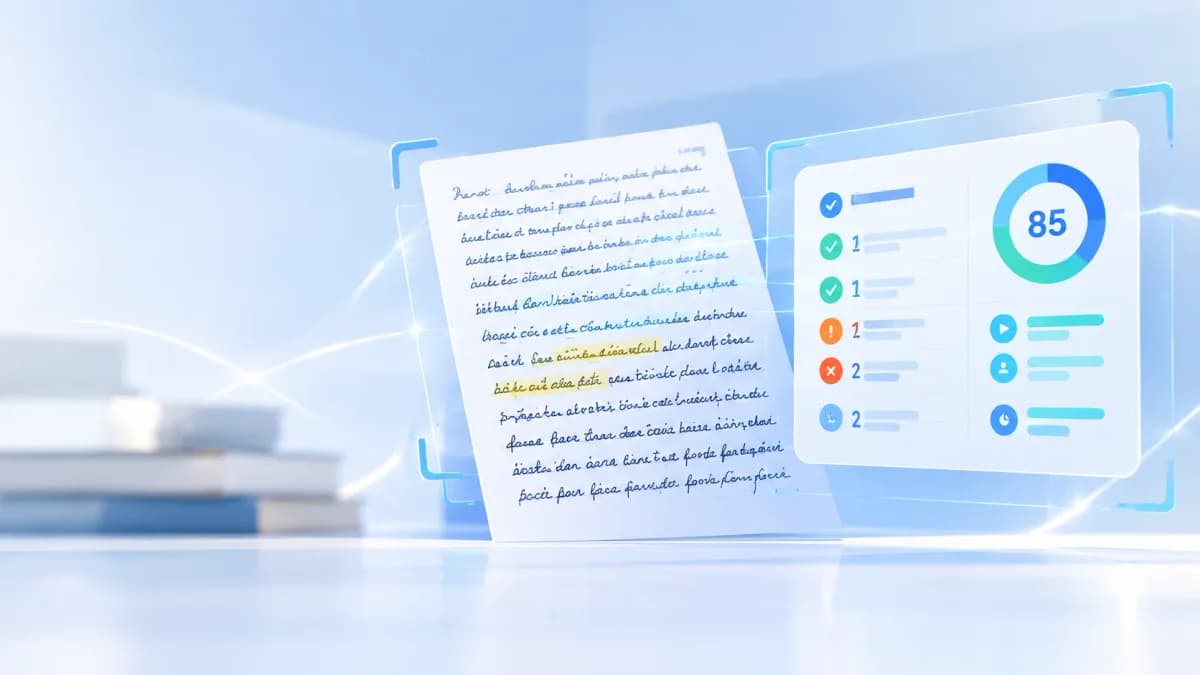
AI reads a class's exam papers and scores every open-ended answer, criterion by criterion, against the rubric the department agreed on. As written exams lean harder on open-ended questions, one set of papers costs a teacher their evenings and a weekend, and two markers rarely give the same answer the same number. Turkish, social studies and science departments feel that first, along with the assessment team held responsible for marking consistency between classes.
AI proposes the score and the teacher has the last word: handwriting is converted to text, the breakdown and partial marks for each criterion appear on screen, and the teacher approves or overrides them. The evenings with a red pen, and the marks copied into a notebook and then a report-card list, collapse into one panel. What comes out is more than a mark — the student gets feedback explaining why the answer earned what it did, and the department sees which outcome the class got stuck on. The written exam stops being paperwork to file and becomes a record the department opens again later in the term.
- Bulk-scanned papers matched to each student automatically
- Handwritten answers converted from image to text
- Rubric authoring with per-question criteria and weightings
- Partial credit shown criterion by criterion
- Teachers approve or override the AI score
- A reasoned written feedback note on every answer
Let's bring your project to life.
Tell us your needs and we'll map out a plan tailored to you.