
A new generation of exam marking.
TamOkuma reads open-ended exam papers with AI, scores every answer against your rubric by the same criteria, and turns the result into student, class and institution reports. The exam stops being a measuring tool and becomes a development tool.
Scan the paper, let the system do the rest.
Five steps from upload to report. All the teacher does is scan the papers and approve the rubric.
Scan the papers
Upload exam papers by scanning or photographing them.
Rubric ready instantly
Upload your own rubric or approve the one the system suggests.
Mark the exams
Handwriting from any grade level is read and reported without trouble.
See the scores
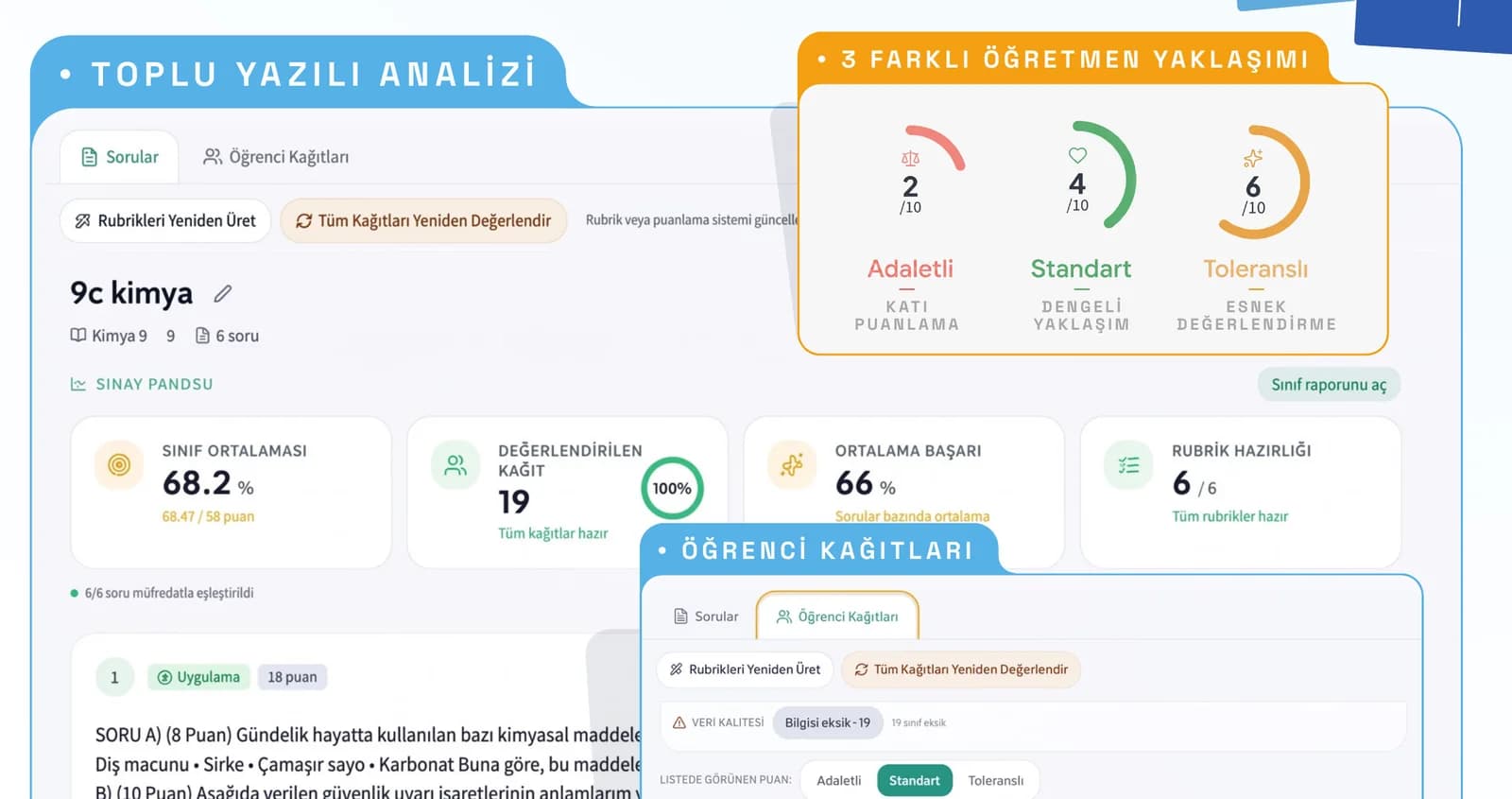
Fair, Standard and Tolerant modes capture every teacher's own approach.
Get an in-depth PDF report
Share detailed PDF reports with parents and students; turn the exam into a development tool rather than a measurement.
Stop reading papers. Start reading results.
A whole class is assessed in a single sitting, so the teacher's time goes into discussing the outcome instead of marking by hand.
One paper, three marking modes.
Every teacher scores differently. TamOkuma marks the paper in all three modes at once, and the institution decides which one counts.
Looks for the rubric criterion word for word. A missing phrase means missing marks.
Takes the rubric as the basis and also credits answers that are right in meaning.
Rewards the right line of thinking; slips in wording do not cost marks.
The same answer from the same student scores 2, 4 and 6 in the three modes above. The report card states which mode produced it — the score follows the chosen criterion, not the teacher's mood.
A whole class, on one screen.
When the exam is uploaded, questions are extracted automatically and matched to the curriculum. The panel shows where the class stands before you open a single paper.
Upload a written exam
Upload your written exam; questions are extracted automatically and matched to the curriculum.
What reaches the parent is not a score, it is a report card.
Per-question scores, the success rate and the marking mode come together in a single PDF for every student.
The report card states which question measures which learning outcome, so the parent can see where every point came from.
Turn the exam into a development tool, not a measurement.
Behind the report card there is feedback written for the student: what was done right, and where to go next.
What you got right
Which connection the student made and why it was correct, point by point, quoting their own answer.
How can you improve?
A concrete study suggestion that closes the gap — guidance, not deductions.
Curriculum tips
Which learning outcome the answer relates to, and where the topic connects in real life.
Recommended videos
YouTube videos matched to the missing learning outcome appear on the report card as QR codes.
Videos chosen for the missing learning outcome are printed on the report card as QR codes; the student scans one and goes straight to the topic.
Full agreement with the teacher's own score.
TamOkuma received top marks for reading accuracy from the teachers who piloted the system. During testing they compared the papers they had marked themselves with the system's marking, and the score the system gave matched the score the teacher gave exactly.
Parents were delighted with the detailed report cards they received — many of them read the card as “the value the school places on my child”.
Which product fits your institution? Let's find out in 20 minutes.
Get in touch with your questions — we'll help you find the right solution for your institution.